
Hotels.com rebrand

THE CONTEXT & OBJECTIVES
As Hotels.com grew exponentially online in the USA and beyond through organic growth and acquisition, two different technical platforms were being used and, subsequently, two separate brands developed: The North America Brand (red) and The Rest of the World Brand (yellow). Both brand had visual differences and brand positioning differences.
With the explosion of mobile usage, especially for those travelling through multiple countries, the need to have a unified global brand for a company became a necessity. The company wanted to unify it all under One Brand.

THE SET UP
- My role: Design Director + some hands on design
- Company: Hotels.com / Expedia
- Main Team: Myself and B2C UI designers collaborating with the branding agency, internal marketing, loyalty, merchandising, CRM and regional marketing teams across 4 global super regions
MY ROLE FOR THIS PROJECT
The new brand was developed by an offline focused branding agency. It was my and my team’s job to:
1. Ensure the new brand assets worked in all channels (online and offline) and implement it… globally.
2. Create the vision of how the new brand values and assets could work in Hotels.com's websites, apps and related communications for our global customers.
OBJECTIVES
1. Audit the current brand assets for both red and yellow brands across all digital touchpoint - get the scope.
2. Create a unified vision of how the new digital brand assets would be implemented globally for over 80 points of sale in 35 languages.
3. Create a rebrand online style guide to be used by all channels in all regions - strict enough to keep each area looking like their assets came from the same company, but flexible enough for the regions to design what they needed to keep culturally relevant and effective (especially for marketing and merchandising)
4. Beta test the new brand before launching 100% by working with the product team (the main website and apps) and marketing to gage user sensitivity and construct an implementation schedule for complete rebrand while causing the least amount of negative revenue impact.
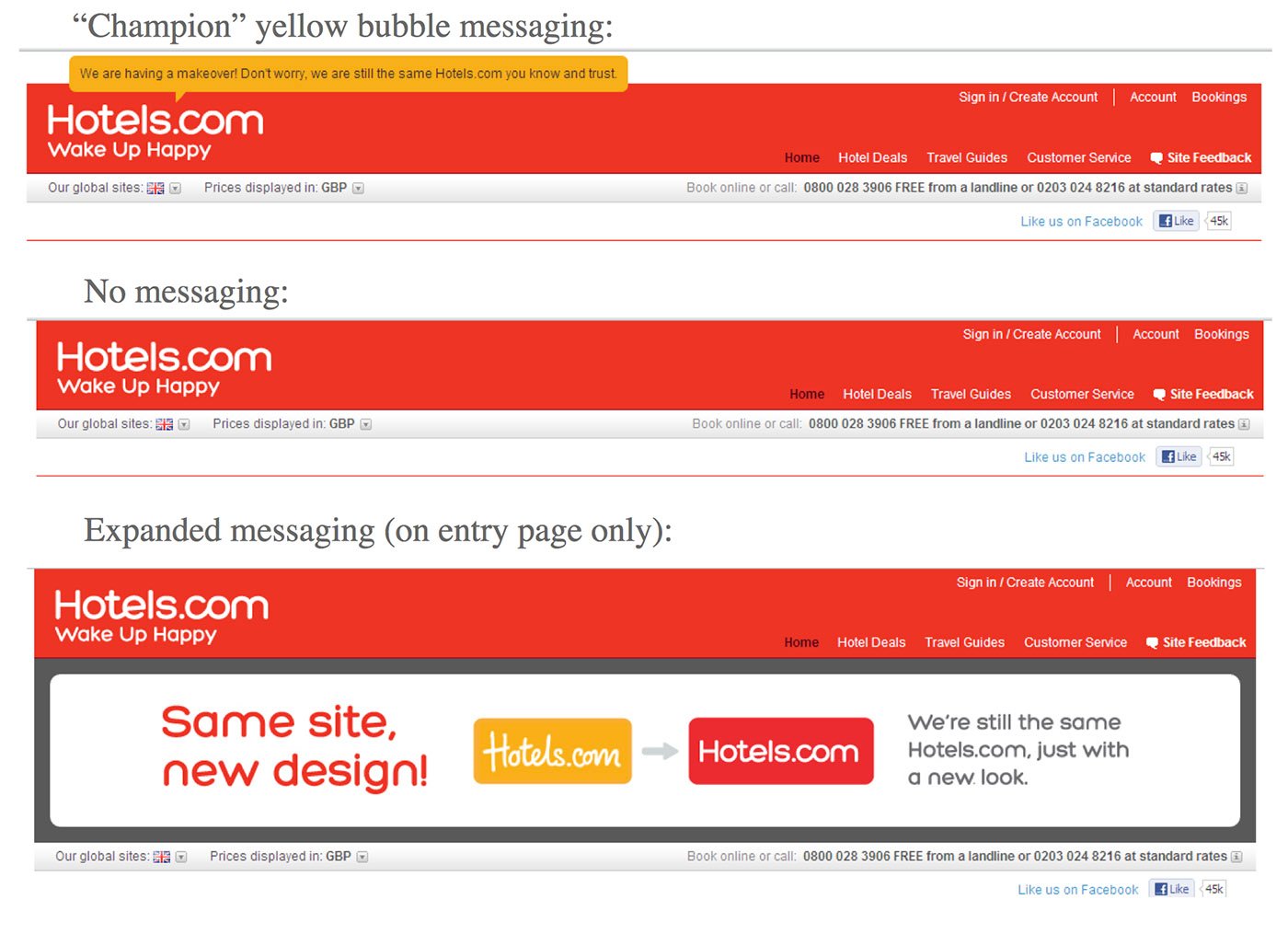
EASING IN THE NEW BRAND
KEY POINTS ABOUT THIS PROJECT
1. This project took 9 months to complete–Shifting to the new brand through so many different points of sale, each one with different reactions to the new brand, along with sheer volume of assets, documentation, and tech implementation took awhile to manage.
2. This project involved managing a over 40 stakeholders across the global offices and several different departments - all of diffing levels, expertise. Getting upper management to agree to small group of representatives for the larger departments to form a brand committee helped enormously to ensure communication, transparency and implementation concerns were addressed efficiently.
3. There was concern about how to best role out this new red brand to the rest of the world (outside of the USA) that had the yellow brand with the least amount of impact to bounce and conversion rates, especially in markets were red was interpreted differently than in North America? Rigorous multi-variant tests of the new assets would determine how far the rebrand could go in the short and long term.
4. Key pages and user journeys belonged to different product teams with their own separate roadmaps. Rebranding, redesigning (and more importantly, programming those new designs) all in one go was not an option. We did a staged roll out, starting with universal CSS changes and upgrading the structure and assets of each jouney bit by bit.
5. We needed to create design standards for product, marketing and merchandising world wide to ensure some consistency and completion of the rebrand. As the complete roll out of the brand took so long and in stages, the brand group met up regularly to mitigate branding disconnects within each POS as they arose.
BRAND VALUES AND A NEW VISION
From spreadsheet to inspiration ignitor
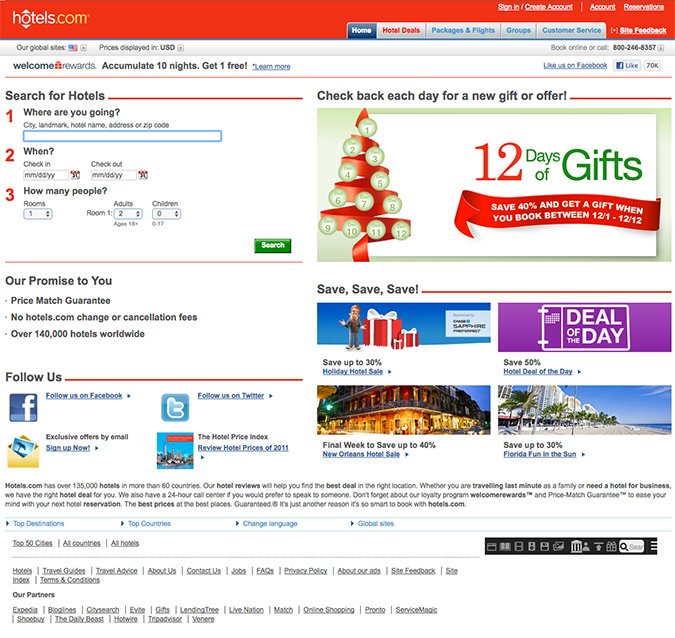
US HOME PAGE - Before the Rebrand
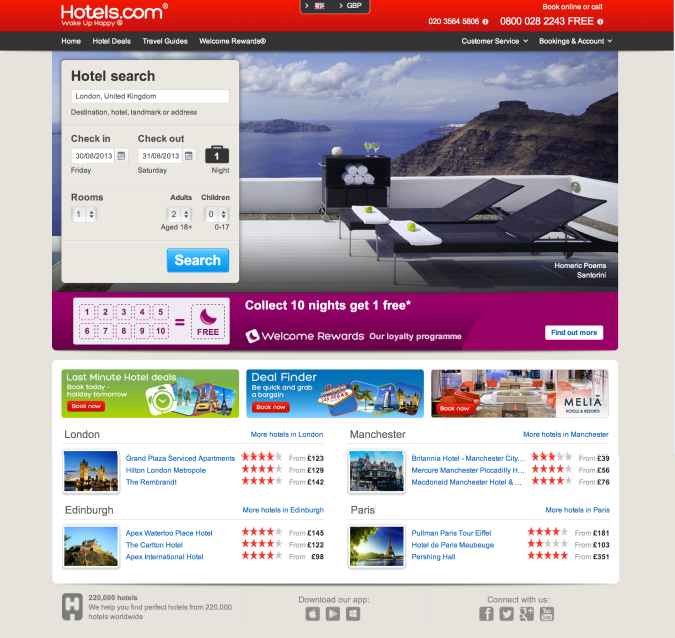
HOME PAGE for ALL WEBSITES - After the rebrand
The new brand values and USPs that drove the design vision
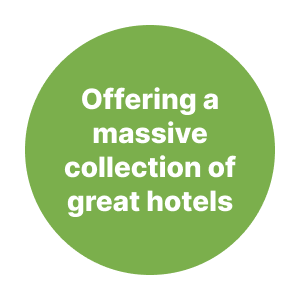
Lots of great properties to book: Show off our inspirational stock - we have a massive inventory
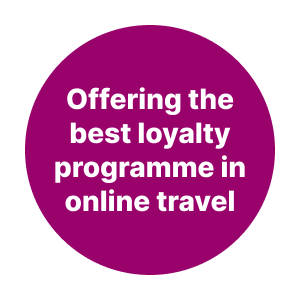
Best Loyalty Programme: Best and most unique loyalty scheme for accommodation OTAs at the time
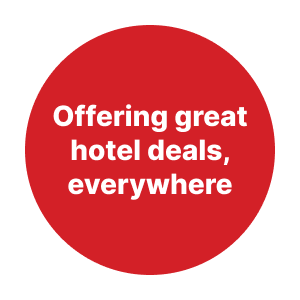
Deals for everywhere:
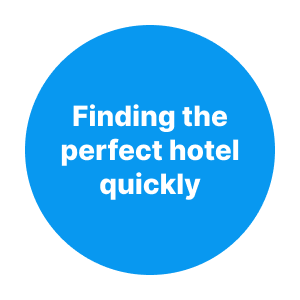
Find that property now
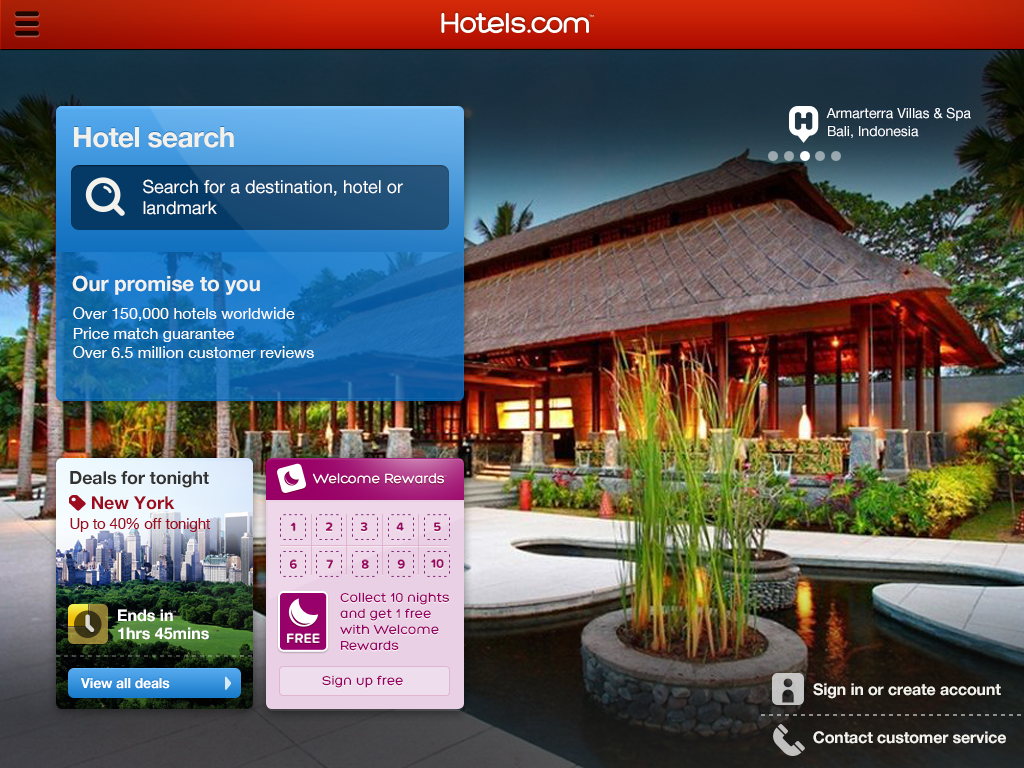
Inspiring travel with the best hotels
EVERY travel company wants to make traveling inspirtational, exotic and expansive.
But most travel companies were using all the same imagery; the same landmarks.
We wanted to do something different by really leaning into what it is we did best - helping people book great hotels.
I redesigned the home experience for the web home page and the apps to:
- Inspire travel by showing off some of the most interesting, visually exciting hotel properties on our platform
- Encourage the commercial team to use this as a revenue generating opportunity with hotels by having their property showcased on the home / landing experiences.
Making the best loyalty programme shine
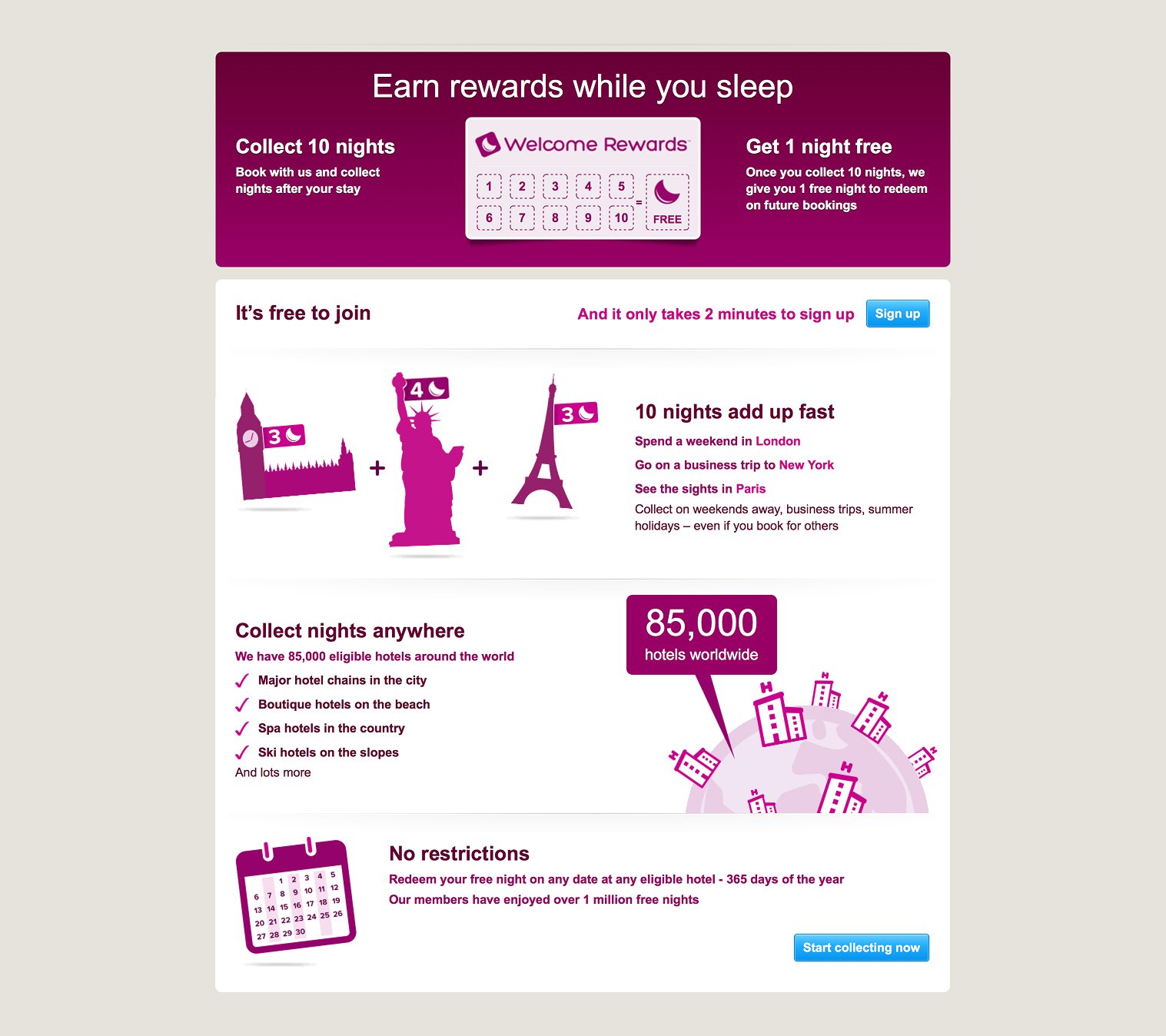
Welcome Rewards was one of the first loyalty schemes introduced in the Online Travel Agent (OTA) sector. It definitely stood out as being one of the best, mostly due to how high the margins were for booking hotels.
We were challenged with:
Coming up with a visual way to track progress with the loyalty programme and helping to reinforce that points were collected by completed full night stays (vs purely number of trips booked) - this led to the moon icon.
Making the branding for the loyalty stand out amongst all the imagery in the product.
Ensure the branding for the programme visually worked with the dominant red colour scheme.
Working with marketing and the loyalty teams to make the messaging for the programme short, punchy, engaging and effective.
MAKING IT WORK IN REAL LIFE
The brand needed to work across digital, print, outdoor and broadcast. Across product, eCRM, merchandising, advertising and PR channels. And across 4 major super regions across the globe and over 80+ points of sale.
The likelihood for designs in local markets to become very inconsistent with the new branding was high. But any guidelines we had needed to give enough flexibility to allow local markets to create assets, especially for marketing and merchandising, that were culturally relevant.
Development of global brand guidelines
A massive internal site for brand and brand asset guidelines was produced for all global offices to use. Putting it together required lots of collaboration and input from departments and offices around the globe - it involved weighing up technical constraints and creative needs for all channels, along with a baseline of global requirements (e.g. logo usage and accessibility requirements) to ensure the brand was as relevant and consistent as possible.
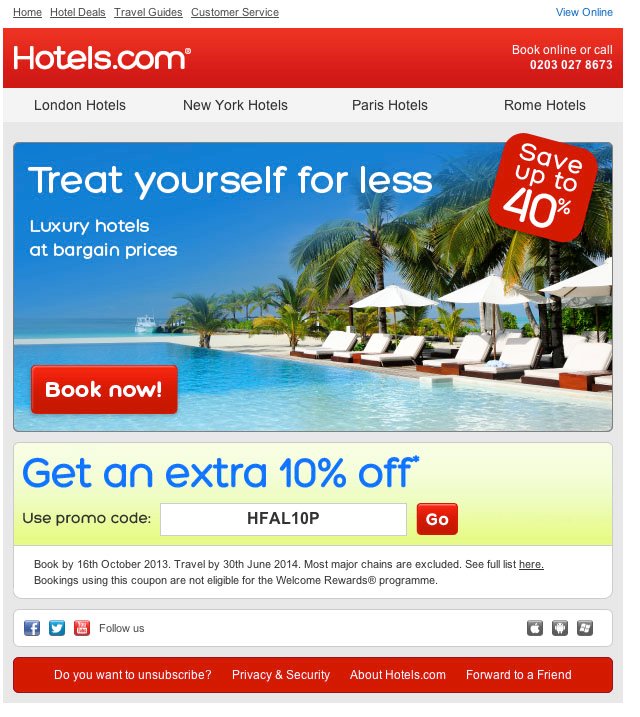
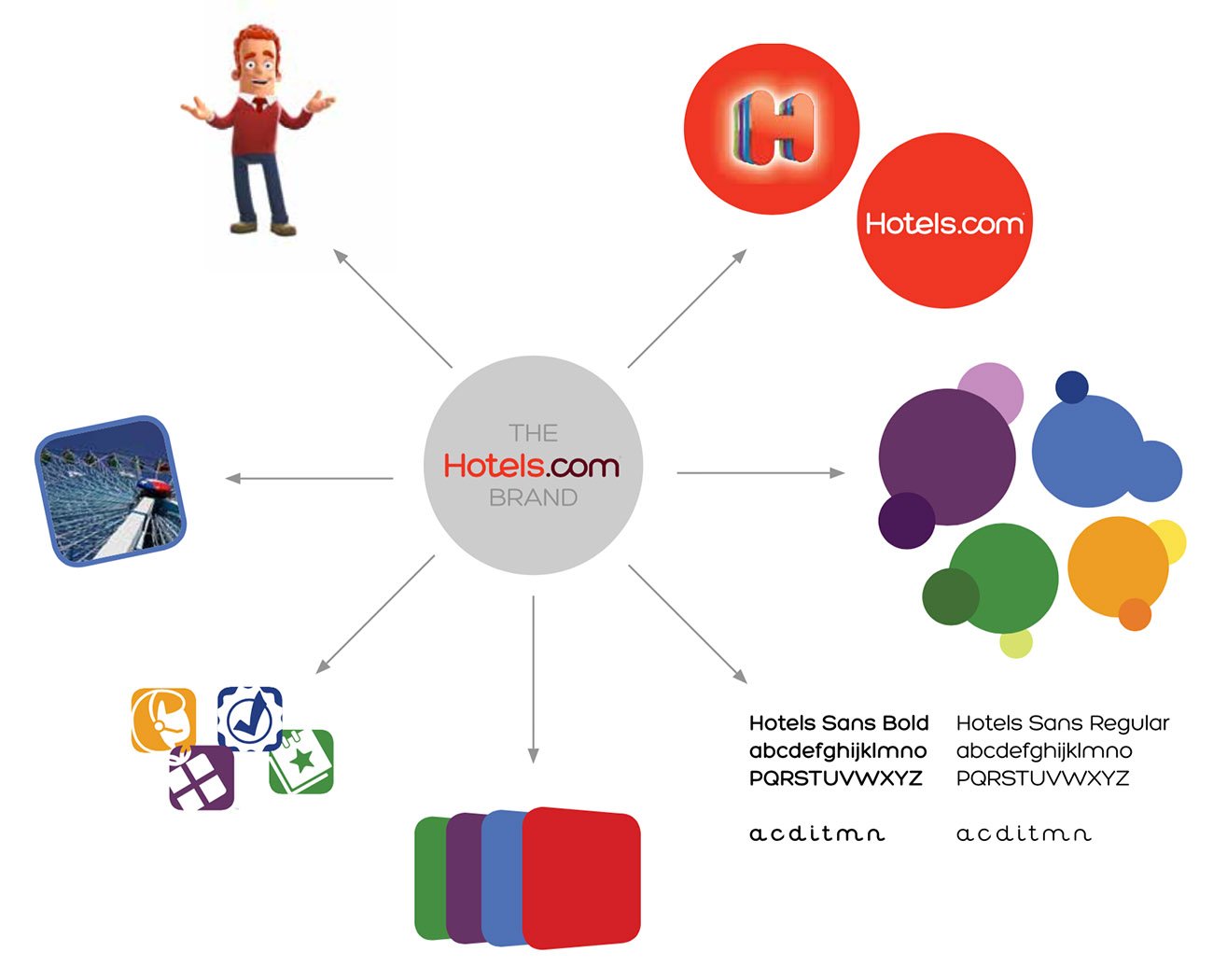
Examples from the global brand guidelines
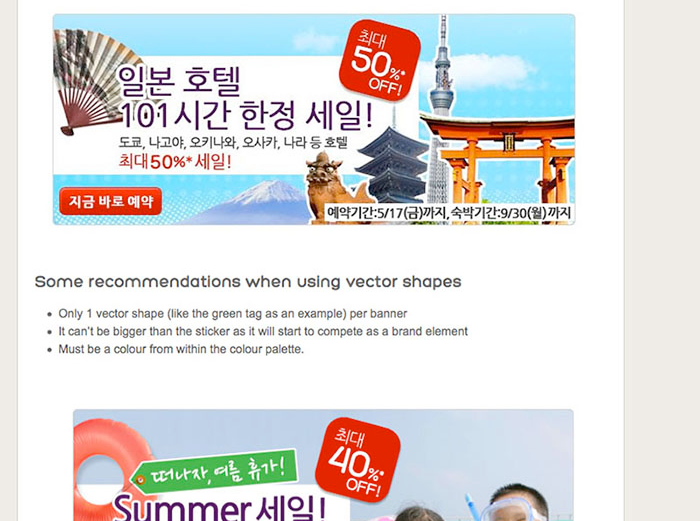
Merchandising Guidelines
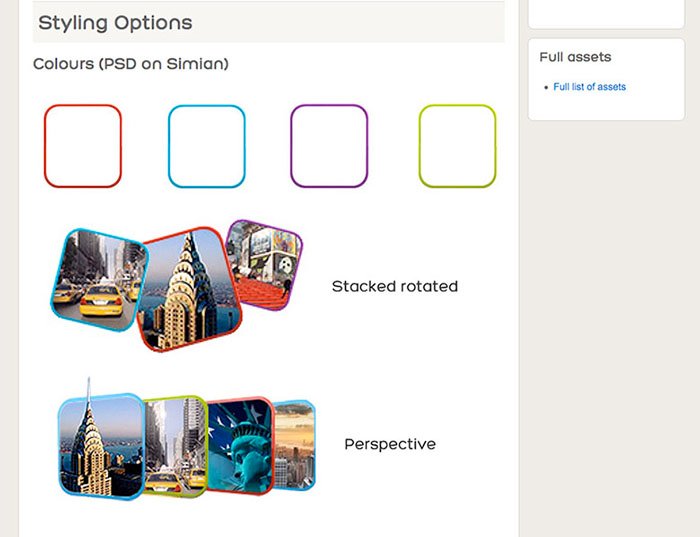
Distinct Brand Shapes & Colours
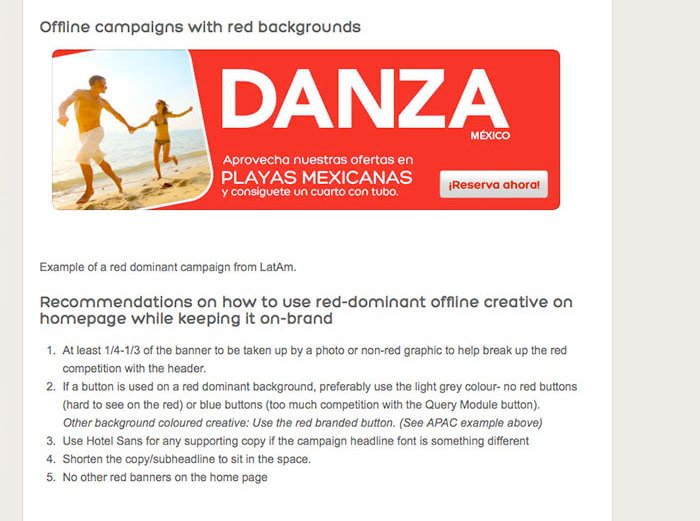
How to bring offline creative to online
THE RESULTS
The rebranded products, marketing, merchandising and loyalty schemes launched to great success
- Rebrand revenue impact was flat or increased after the rebrand fully relaunched - after initial testing of switching yellow to red, and giving users 2-4 weeks of "warning" that things were going to change, the impact on revenue, NPS scores and contacts to customer service were within expected range or better
- Number of hotel detail pages viewed increased by approximately 3 pages per session
- Bounce rate stabilised or dropped in most points of sale across the world
- Sign-up to the Welcome Rewards programme increased by 17% over expectations overall
- Global style guides and assets across product, marketing and merchandising ensured a far more consistent experience across POSs across the world
Want more detail?
This is just the topline . I am happy to go into more relevant detail. Just contact me and let me know which areas you'd like to know more about.
Other Projects


Location
London, UK
Copyright
2025. All rights reserved.